
How economic problems in Russia due to the war with Ukraine could influence the collapse of Russia as a state
The economic problems caused by the war with Ukraine could indeed weaken Russia as a state, but the path to complete “collapse” is a complex and unlikely scenario in the short term. However, under certain conditions, economic difficulties could lead to serious internal upheaval. Below, we’ll examine how this could play out:
1. Economic isolation and sanctions
What’s happening:
- Western sanctions have limited access to technology, finance, markets, and investment.
- The departure of foreign companies and a decline in investment.
- Restrictions on oil and gas exports, price ceilings, embargoes.

Consequences:
- Technological lag, especially in the military-industrial complex, energy, aviation and IT.
- Loss of sales markets and reduction in export revenue.
- Limited access to foreign currency and problematic macroeconomic stability.
2. Pressure on the budget and rising costs
What’s happening:
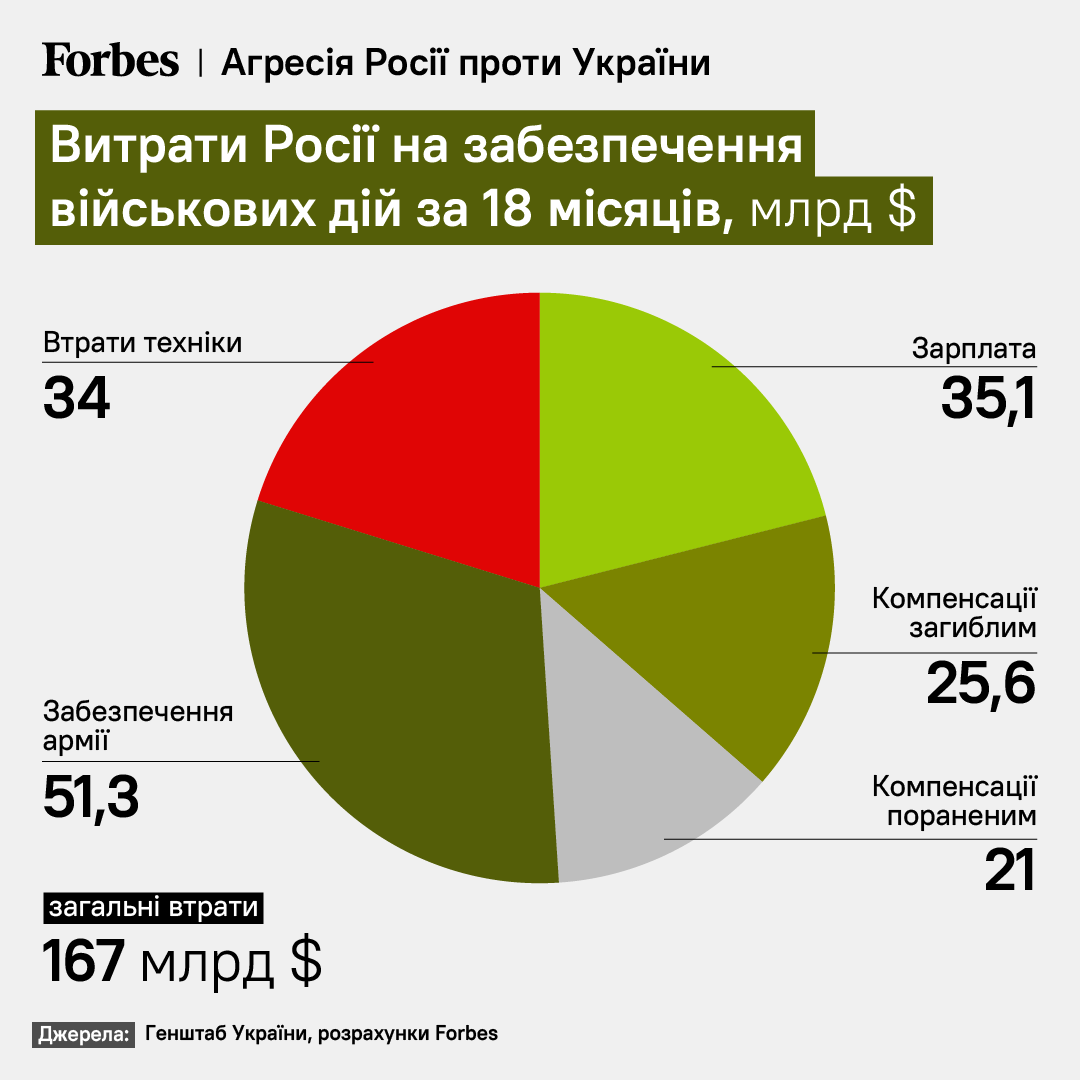
- War expenses (army, mercenaries, equipment, logistics) have increased exponentially.
- Budget revenues are suffering from export restrictions and falling oil/gas prices.
Consequences:
- Growing budget deficit.
- Printing money (emission), which can lead to inflation.
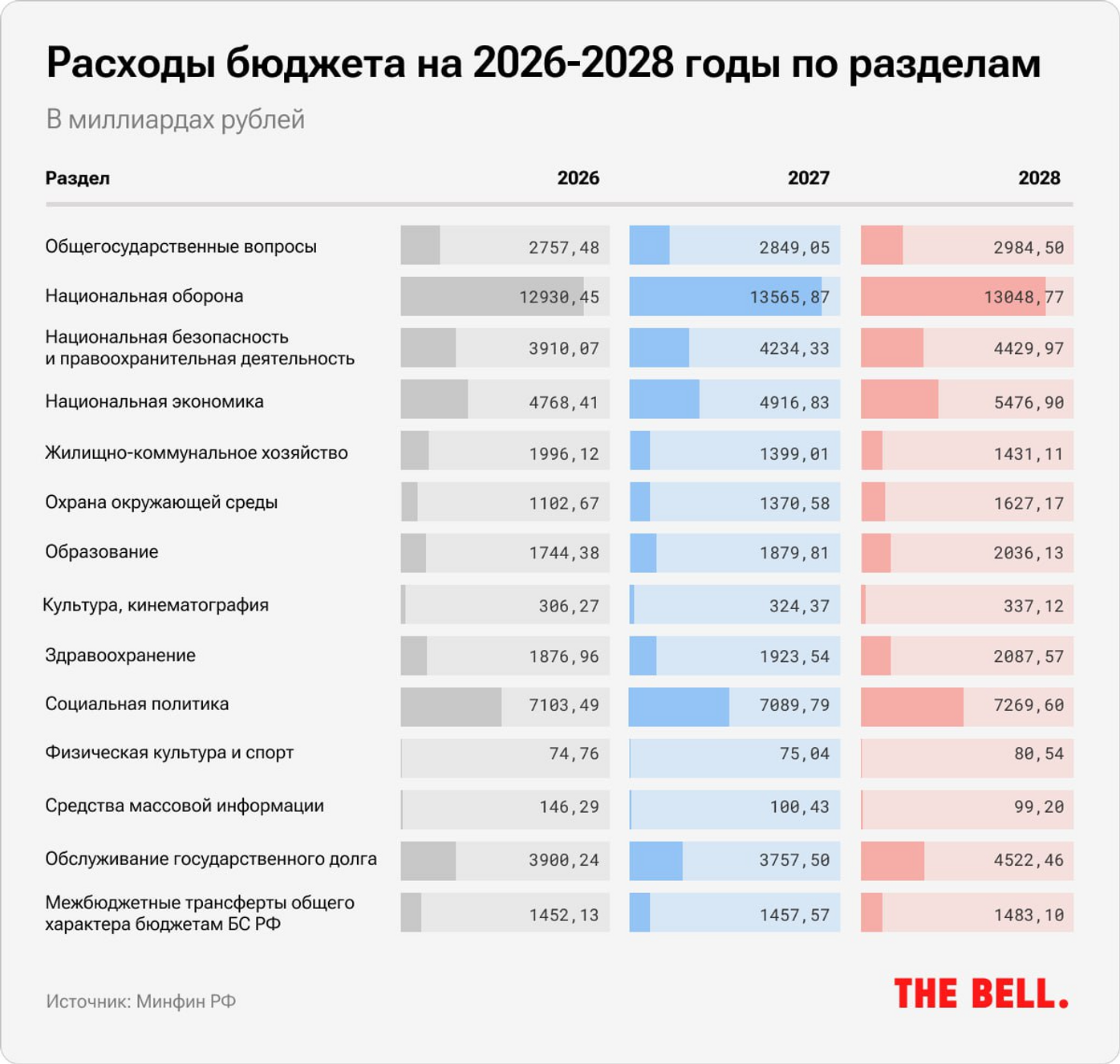
- Reduction of funding for the social sphere, regions, and infrastructure.
3. Regional discontent and inequality
What’s happening:
- Numerous Russian regions are already subsidized.
- The centralization of power and the uneven distribution of resources are exacerbated by the crisis.
Consequences:
- Discontent is growing in regions where living standards are falling.
- A rise in separatist sentiments is possible (for example, in national republics).
4. Social tension
What’s happening:
- Rising prices, job losses, mobilization, falling incomes.
- Increased repression, suppression of discontent.
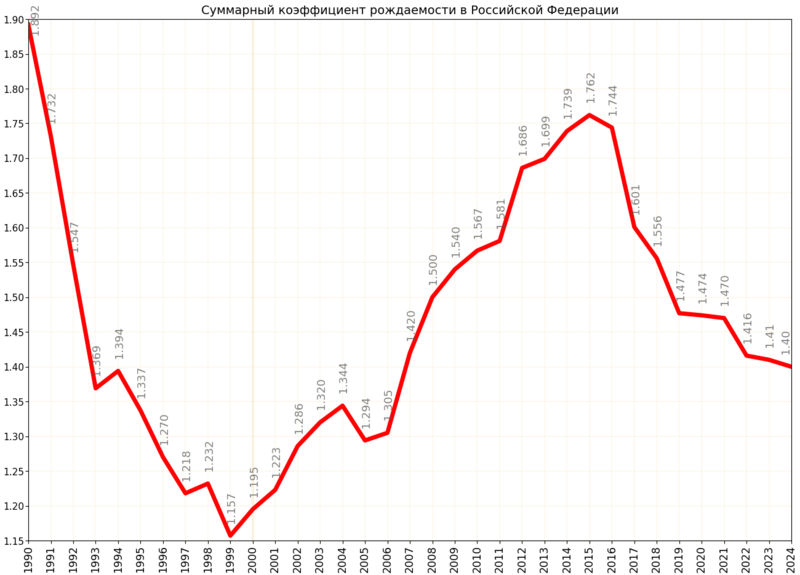
Total fertility rate in the Russian Federation, 1990–2024
Consequences:
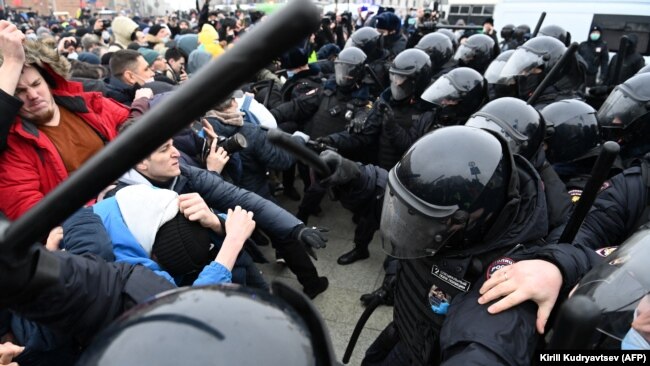
- Potential mass protests, strikes, discontent within the security forces.
- Escalation of distrust towards the central government.
5. Potential for disintegration (but not a guarantee)
The history of Russia (and the USSR) shows that when combined:
- economic collapse,
- ineffective management,
- military defeats,
- internal fragmentation,
A weakening of the center and even disintegration along ethnic republic and regional lines are possible. However, this would require profound internal crises.
Bottom line: Threats, but not inevitability, of collapse
| Factor | Risk for the state |
| Sanctions and isolation | Medium → Long-term risk |
| Budget deficit | High |
| Social discontent | Average |
| Regional separatism | Low → when escalating – high |
| The collapse of the state | Low, but possible under certain conditions |
A pessimistic scenario for the development of the situation in Russia, based on the economic problems caused by the war with Ukraine. This is not a prediction, but a logical model based on current and potential trends.
Pessimistic scenario: Erosion of the state
Period: 2025–2030
The main idea: protracted war, deepening isolation, increasing internal pressure → weakening of the center → fragmentation of power.
- 2025–2026: Financial exhaustion and military pressure
- The budget cannot cope with the load:
- Military spending is above 30% of the budget.
- Oil and gas revenues are falling due to cheap raw materials and sanctions.
- Increased emission leads to accelerated inflation (15–25%).
- Reserves are spent :
- The National Welfare Fund is almost depleted.
- Problems with importing critical components (electronics, automotive industry, aviation).
- Protracted or losing war :
- Losses at the front.
- Mass mobilization is causing irritation in the regions.
- Protests are suppressed, but discontent is growing.
- 2026–2027: Growing instability
- Growing protest sentiments :
- Large-scale strikes and industrial action in regions with industrial collapse.
- Local elites begin to ignore the center (de facto autonomy).
- Default of regions and companies :
- Local budgets are going bankrupt.
- Large state corporations in the energy and transport sectors are no longer operating efficiently.
- The collapse of the vertical power structure :
- The center is losing control over certain regions (especially in the Caucasus, Yakutia, and the Far East).
- PMCs, criminal structures and local elites begin to “control” territories.
- 2028–2030: Disintegration Phase
- Actual paralysis of the center :
- The Kremlin retains nominal power, but the regions act independently.
- Internal conflicts between power groups, struggle for resources.
- Beginning of decay :
- Some national republics (for example, Tatarstan, Bashkortostan, Yakutia, the Caucasus regions) are seeking de facto sovereignty.
- The center cannot provide either security or supplies.
- Threats of civil war :
- Fights between various security forces (security forces, military, PMCs).
- Possible intervention by China, Turkey, and other countries on the periphery.
Final phase (2030): “Erosion of the state”
Russia remains nominally a unified state , but in essence it is:
- Network of regional regimes;
- Weakened central authority;
- Unstable economy;
- Disparate armed groups;
- External dependence on China/Iran/other authoritarian partners.
Clarification:
This scenario is not inevitable , but is possible if:
- continuation of military operations without strategic success;
- maintaining international isolation;
- increasing internal instability;
- failure of institutional management.
Conclusion: Paradoxically, Ukraine’s victory in this war could save Russia from collapse!
If you found this post helpful and interesting, please share and leave a comment.
Если вы считаете, что эта заметка была вам полезна и вас заинтересовала, тогда делитесь и пишите комментарии.